Chemical DPC Injection · Brisbane
The permanent fix for rising damp: a new damp-proof course injected directly into the wall, creating a water-repellent barrier the moisture can't cross. No bricks removed, most homes done in a day or two, backed by a 2-year warranty.
Tell us what you're seeing — or what your building report said — and we'll arrange a no-obligation on-site inspection and written quote.
We connect you with QBCC-licensed damp specialists servicing inner Brisbane. No obligation. The specialist's assessment fee is $450 plus GST. That includes up to two hours on site diagnosis, that may include camera inspection of the stormwater drains.
What it is
A damp-proof course (DPC) is the horizontal waterproof barrier built into a wall near ground level that stops soil moisture wicking up through the masonry. Modern homes get a plastic membrane; older Brisbane homes were built with slate or bitumen — or, very commonly in the pre-1946 Queenslander belt, with nothing at all.
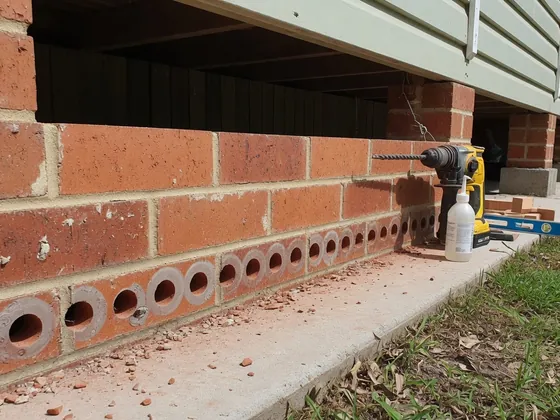
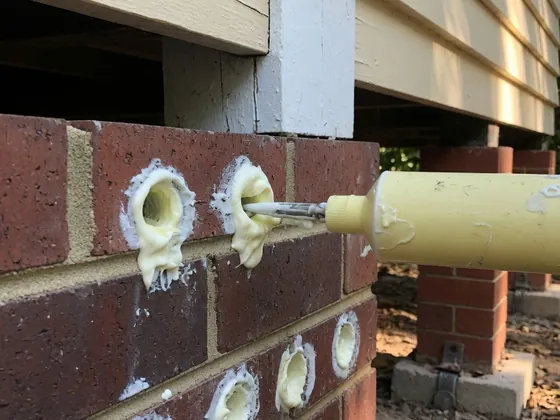
When the DPC is missing or failed, the traditional fix was to cut out whole courses of brick and physically insert a new barrier — slow, disruptive and expensive. Chemical injection replaces all that. We drill a series of small holes into the mortar course at the right height, then inject a silane/siloxane damp-proofing cream under low pressure. The cream spreads through the wall's capillaries — the same channels the moisture uses to rise — and cures into a continuous water-repellent barrier inside the wall itself.
The wall above the new DPC then dries out naturally over the following months, and with the moisture source cut off, the salt damage stops progressing.
Chemical DPC injection treats genuine rising damp: ground moisture rising through masonry because the DPC is absent, failed or bridged. It is not the fix for condensation, roof or plumbing leaks, or lateral damp pushing sideways through a wall from a garden bed or retaining wall — those need different treatment. That's exactly why we diagnose with moisture meters before quoting: injecting a DPC into a wall that actually has a condensation problem fixes nothing.
The process
Moisture-meter readings confirm rising damp and map the affected walls. We mark the injection line on the lowest accessible mortar course.
Small holes are drilled at close intervals along the mortar bed. The damp-proofing cream is injected and spreads through the masonry capillaries.
The cream cures into a permanent water-repellent DPC inside the wall — designed to last the lifetime of the mortar.
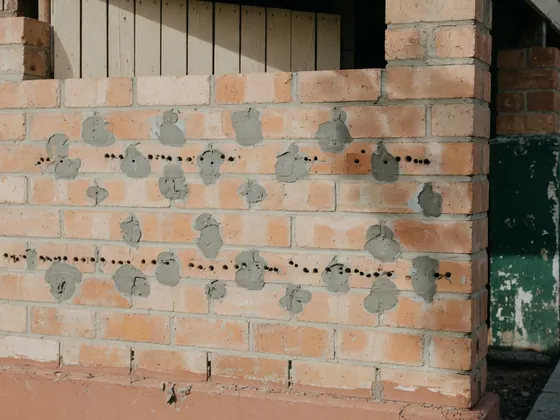
Holes are pointed up. Where plaster is salt-damaged we strip and re-render with a salt-retarding render. The wall dries over 6–12 months.
Pricing
Roughly $200–$400 per linear metre of treated wall
Price varies with wall thickness (single-skin vs double-brick), access, and whether salt-damaged plaster needs stripping and re-rendering. A typical single-wall treatment lands in the low thousands. Your quote is fixed and in writing after the free call — see the full cost guide.
In Brisbane's Queenslanders
Common questions
Properly installed, the cured barrier is designed to last the lifetime of the mortar it sits in — typically 20 years or more. The workmanship carries a 2-year warranty. It isn't a coating that wears off; it's a chemical change inside the wall.
No — that's the point of the injection method. Small holes are drilled into the mortar course and pointed up afterwards. The older alternative of physically cutting in a new DPC is rarely needed and far more disruptive.
The injection itself takes a day or two for most homes, but the wall then dries naturally as the residual moisture evaporates — usually over 6 to 12 months depending on wall thickness and weather. We time any replastering and repainting around that drying period.
Yes. On timber Queenslanders the damp usually shows in the brick piers, base walls and any built-in ground-floor masonry. We treat the affected masonry and often pair it with subfloor ventilation to keep the underfloor space dry.
Yes — modern silane/siloxane damp-proofing creams are non-hazardous, low-odour and injected at low pressure. You can stay in the home while the work is done.
We'll confirm whether a chemical damp-proof course is genuinely what your wall needs — and give you a fixed written quote if it is.
We connect you with QBCC-licensed damp specialists servicing inner Brisbane. No obligation. The specialist's assessment fee is $450 plus GST. That includes up to two hours on site diagnosis, that may include camera inspection of the stormwater drains.
Explore
 Rising Damp