Lateral Damp Treatment · Brisbane
Damp patches higher than a metre, one wet wall backing onto a garden bed or a hillside cut, stains that don't follow the classic tide-line? That's lateral damp — moisture pushing horizontally through the wall — and it needs a different fix from rising damp. We diagnose which one you've got, then treat it properly.
Tell us what you're seeing — or what your building report said — and we'll arrange a no-obligation on-site inspection and written quote.
We connect you with QBCC-licensed damp specialists servicing inner Brisbane. No obligation. The specialist's assessment fee is $450 plus GST. That includes up to two hours on site diagnosis, that may include camera inspection of the stormwater drains.
The problem
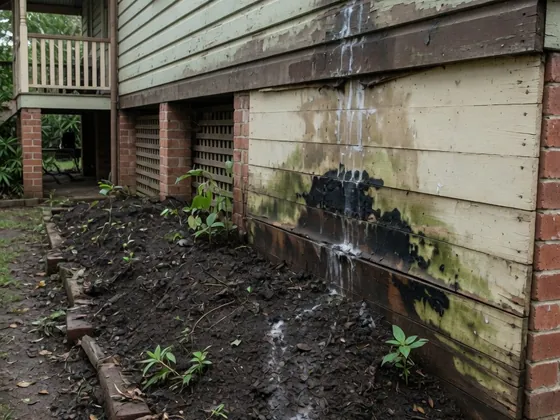
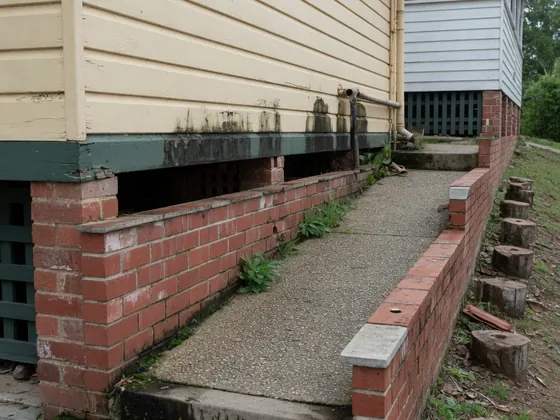
Lateral damp (also called penetrating damp at ground level) happens when soil or landscaping sits against a wall higher than its waterproofing — so moisture pushes horizontally through the masonry instead of rising from below. The classic culprits: garden beds built up against the house, paths and driveways poured above the damp-proof course, retaining walls without drainage, and homes cut into hillsides where one wall effectively holds back earth.
That last one matters in Brisbane's inner west. Suburbs like Paddington, Red Hill and Bardon are built on steep ridges, and their older homes are full of downhill walls and under-croft rooms with soil sitting against them. Lateral damp is endemic there — and it's routinely misdiagnosed as rising damp, which leads to the wrong (and wasted) treatment.
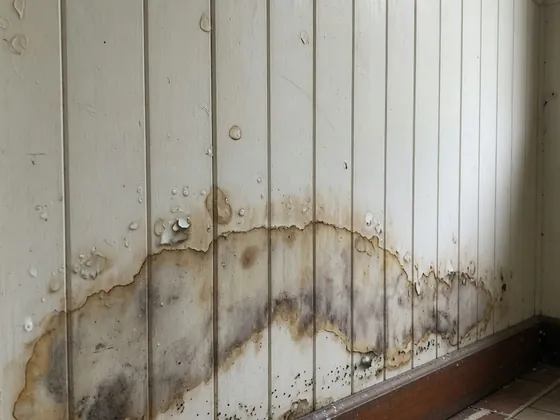
Rising damp peaks at a fairly even height around a metre, across a whole wall. Lateral damp follows the soil: patches can appear at any height, are usually worst on the one wall with ground against it, and often flare after rain. A DPC injection won't fix lateral damp — the moisture isn't coming up, it's coming through. The moisture-meter pattern tells us which one you have.
The fix
We identify exactly what's holding moisture against the wall — soil level, garden bed, path, or a retaining structure — and how high it sits relative to the waterproofing.
Where practical, the cheapest durable fix is physical: lowering the soil line, pulling the garden bed away, or cutting a drainage gap along the wall.
Where the ground can't move — hillside cuts, retaining walls — we apply waterproof tanking membranes and install drainage so water is directed away instead of soaking through.
Salt-damaged render is stripped and replaced with a salt-retardant system, same as a rising damp repair — because lateral damp carries the same salts.
Pricing
From simple landscaping fixes to tanking & drainage systems
The range is wide because the fixes are: lowering a garden bed costs very little, while tanking a hillside wall with new drainage is a bigger job. The assessment tells you which end you're at — and the quote is fixed and in writing before anything starts.
In Brisbane's Queenslanders
Common questions
Rising damp peaks at an even height around a metre across the wall; lateral damp follows the soil line, can appear at any height, is usually worst on one wall with ground against it, and flares after rain. The moisture-meter pattern during the assessment confirms it — and it matters, because the treatments are completely different.
No — a DPC blocks moisture rising from below, but lateral damp comes through the wall sideways, above the DPC line. That's why correct diagnosis comes first. The fix is removing the moisture source, or waterproofing and draining the wall that has ground against it.
Very likely, at least in part. Built-in under-croft and garage rooms on Brisbane's hillside blocks usually have at least one wall retaining soil, often with no membrane behind it. These rooms typically need tanking and drainage rather than (or as well as) a DPC.
Re-rendering without fixing the moisture path fails the same way painting over salt damp does — the moisture and salts come straight back through the new render. Stop the water first, then repair the surface.
Describe the wall and what's outside it — garden bed, path, hillside — and we'll work out where the moisture's coming from.
We connect you with QBCC-licensed damp specialists servicing inner Brisbane. No obligation. The specialist's assessment fee is $450 plus GST. That includes up to two hours on site diagnosis, that may include camera inspection of the stormwater drains.
Explore
 Rising Damp