Salt Damp Treatment · Brisbane
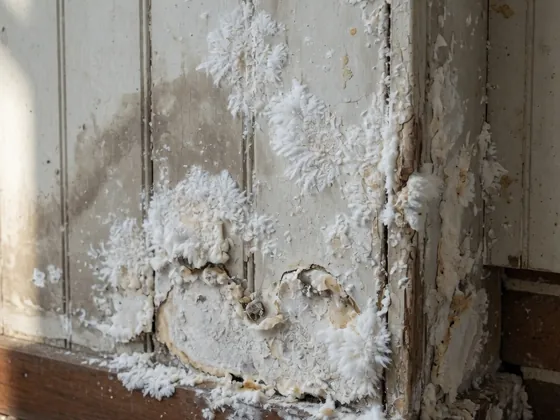
White powdery deposits, bubbling paint, plaster that crumbles at a touch — salt damp keeps destroying a wall even after the moisture is stopped. We remove the contaminated material and re-render with salt-retardant systems so the damage doesn't creep back through the new surface.
Tell us what you're seeing — or what your building report said — and we'll arrange a no-obligation on-site inspection and written quote.
We connect you with QBCC-licensed damp specialists servicing inner Brisbane. No obligation. The specialist's assessment fee is $450 plus GST. That includes up to two hours on site diagnosis, that may include camera inspection of the stormwater drains.
The problem
When ground moisture rises through masonry, it carries dissolved ground salts with it. As the water evaporates from the wall surface, the salts stay behind and crystallise — that's the white, powdery efflorescence you can see, and the crystals physically break apart plaster, paint and even the face of the brick as they grow.
Here's the part most people miss: some of those salts are hygroscopic — they pull moisture straight out of the air. So even after a new damp-proof course has stopped the rising moisture, salt-contaminated plaster keeps getting damp on humid Brisbane days, and keeps bubbling and crumbling. Painting over it fails within months. The contaminated material has to come off.
A skim coat or a fresh coat of paint traps the salts underneath, where they keep attracting moisture and keep crystallising. The new surface blisters, the stain bleeds through, and you're back where you started — minus the cost of the repaint. The only durable sequence is: stop the moisture, remove the contaminated plaster, then re-render with a salt-retarding system.
The fix
Salt treatment only holds if the moisture is stopped first — usually with a chemical DPC. If the source is still active, we fix that before touching the plaster.
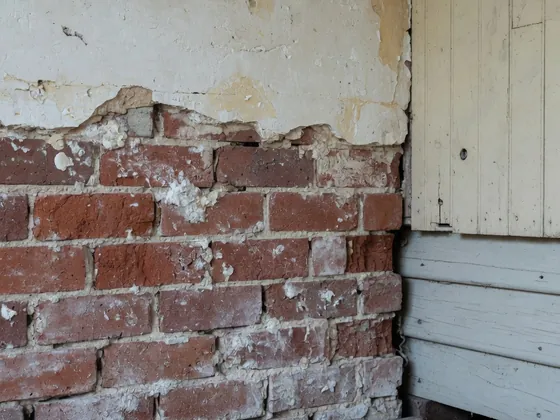
Salt-affected plaster and render are removed back to sound masonry — typically to about 300mm above the highest visible damage.
Where contamination is heavy — common in heritage brick — poultice treatments draw the remaining salts out of the masonry before re-rendering.
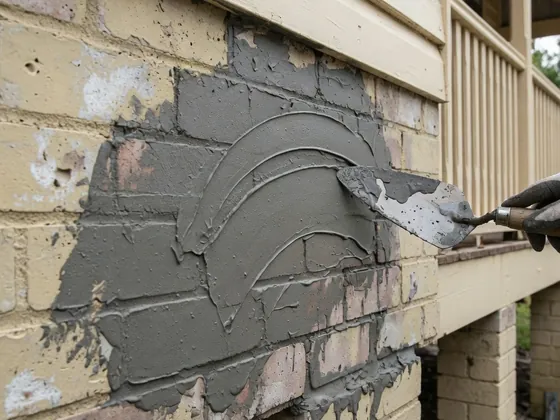
The wall is re-rendered with a salt-retarding additive that blocks any residual salts from migrating to the new surface, then finished ready to paint.
Pricing
Priced per wall — strip, treat and re-render
Cost depends on the area of contaminated plaster and how heavily salted the masonry is. It's usually quoted together with the DPC injection as one fixed figure, since the two are done as a single job. See the full cost guide for typical ranges.
In Brisbane's Queenslanders
Common questions
Efflorescence — ground salts left behind as rising moisture evaporates from the wall. It brushes off, but it always comes back while the wall is still damp, and the crystals growing inside the plaster and brick are what cause the crumbling damage.
You can, but it fails — usually within months. The hygroscopic salts under the paint keep pulling moisture from the air, and the new surface blisters and stains. The contaminated plaster has to be removed and replaced with a salt-retardant render.
Standard practice is to strip to roughly 300mm above the highest visible damage or salt line, because contamination extends beyond what you can see. Stripping too little is one of the main reasons cheap repairs fail.
Yes — heritage brick and stone are where salt damp is most common and where the poultice-style salt removal matters most, because the masonry itself needs protecting, not just the render. The treatment approach is chosen to suit the original materials.
Send a photo of the wall if it's easiest — we'll tell you whether it's salt damp and what a lasting repair involves.
We connect you with QBCC-licensed damp specialists servicing inner Brisbane. No obligation. The specialist's assessment fee is $450 plus GST. That includes up to two hours on site diagnosis, that may include camera inspection of the stormwater drains.
Explore
 Rising Damp